
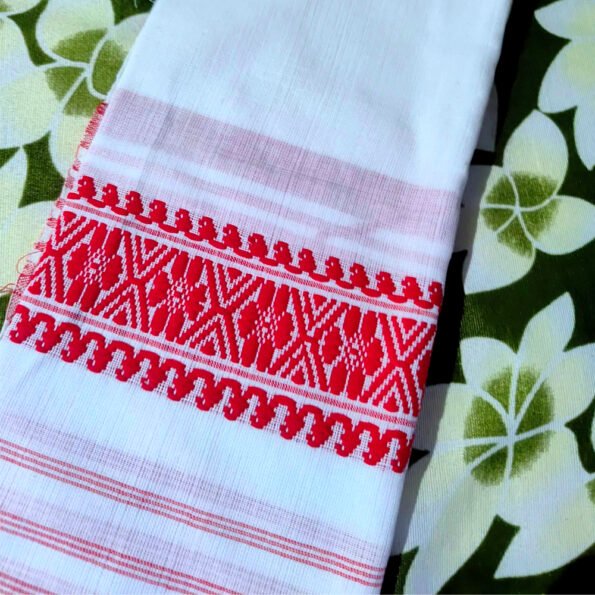
Dressing the Spirit of Bihu
Bihu is the heart of Assamese culture, and traditional attire and jewelry play a vital role in expressing its joy, identity, and heritage. During Bihu—especially Rongali Bihu—people across Assam dress in traditional clothing that reflects purity, elegance, and deep cultural pride.
Traditional Bihu attire is not about extravagance but about grace, symbolism, and craftsmanship, passed down through generations.
Traditional Bihu Attire for Women
1. Mekhela Chador – The Iconic Assamese Dress
The Mekhela Chador is the most important traditional attire worn by Assamese women during Bihu.
Components
- Mekhela – The lower wrap, pleated and tucked
- Chador – The upper cloth draped gracefully
During Bihu, Mekhela Chador is usually made from:
- Muga silk (golden hue – most prestigious)
- Pat silk (white with elegant shine)
- Eri silk (softer, more natural texture)
Colors and Designs for Bihu
- White or off-white base
- Red woven borders (symbol of purity and energy)
- Traditional Assamese motifs
The red-and-white combination is especially associated with Rongali Bihu.
Traditional Jewelry Worn During Bihu
Assamese jewelry is known for its bold designs inspired by nature—flowers, crescent moon, birds, and traditional symbols.
2. Junbiri
- Crescent moon–shaped necklace
- Symbolizes femininity and elegance
- One of the most iconic Assamese ornaments
3. Gamkharu
- Thick traditional bangles
- Usually worn in pairs
- Represents prosperity and strength
4. Keru
- Traditional Assamese earrings
- Worn during dance performances
- Adds grace and movement
5. Golpota & Dugdugi
- Golpota: Necklace inspired by serpent forms
- Dugdugi: Floral pendant jewelry
Traditionally crafted using gold or gold-plated metals.
Traditional Bihu Attire for Men
6. Dhoti and Kurta
Assamese men wear:
- Dhoti – Wrapped around the waist
- White Kurta – Simple and elegant
The attire reflects simplicity and comfort, suitable for dance and celebration.
7. Gamocha – Symbol of Assamese Identity
The Gamocha is an essential part of Bihu attire for men.
- White cloth with red woven patterns
- Worn around the neck or head
- Used as a symbol of respect and honor
No Bihu celebration is complete without the Gamocha.
Bihu Dance Costume and Its Importance
During Bihu dance performances:
- Women wear light silk Mekhela Chador for movement
- Men wear Dhoti, Gamocha, and sometimes headgear
- Jewelry enhances rhythm and expression
The attire complements the beats of dhol, pepa, and taal, making the dance visually captivating.
Materials Used in Traditional Bihu Clothing
Traditional Bihu attire is eco-friendly and handcrafted using:
- Natural silk fibers
- Handloom weaving
- Minimal chemical processing
This aligns with Assam’s sustainable and slow-fashion traditions.
Cultural Symbolism of Bihu Attire & Jewelry
Each element carries meaning:
- White – Purity and peace
- Red – Fertility and joy
- Gold ornaments – Prosperity and tradition
- Handloom fabric – Self-reliance and heritage
These symbols connect people to their roots.
Modern Influence on Bihu Fashion
While tradition remains central:
- Designers experiment with lighter fabrics
- Younger generations adopt fusion styles
- Jewelry may be gold-plated or handcrafted alternatives
However, the core identity remains unchanged.
Why Traditional Bihu Attire Still Matters Today
Traditional Bihu attire:
- Preserves Assamese identity
- Supports local weavers and artisans
- Promotes sustainable fashion
- Strengthens cultural continuity
Wearing traditional dress during Bihu is an act of cultural pride and respect.
Bihu Attire Beyond Assam
Today, Assamese communities worldwide celebrate Bihu by:
- Wearing traditional attire abroad
- Organizing cultural programs
- Promoting Assamese fashion globally
This keeps the tradition alive across borders.
Where to Buy Authentic Bihu Attire & Jewelry
Authentic Bihu clothing and jewelry should be:
- Handwoven
- Locally crafted
- Made using traditional designs
Platforms like AssamOnlineBazaar.com help connect buyers directly with Assamese weavers and artisans, ensuring authenticity and fair trade.
Conclusion: Wearing Culture, Celebrating Identity
Traditional Bihu attire and jewelry are more than festive clothing—they are expressions of Assamese history, values, and craftsmanship. From the graceful Mekhela Chador to the symbolic Junbiri and Gamocha, each piece tells a story of tradition and pride.
At AssamOnlineBazaar.com, we celebrate these traditions by supporting the artisans who keep Assam’s cultural legacy alive.
🌸 Dress traditionally. Celebrate proudly. Preserve culture.